As the weather starts to warm and summer break approaches, you can bet there are conversations happening across elementary and secondary ELA departments about summer reading. Should we select one book that everyone will read? Should we provide students with a list of books to choose from? How will we curate the list? By grade levels or grade bands? Should we partner with the local library?
How will we hold students accountable?
- Through a reading log?
- Through response journals?
- Through an assignment?
We annually cycle through these conversations and questions, but to what avail? Do summer reading assignments build reading habits?
As a literacy educator and English teacher I want my students to develop a love of reading because I know the power of diving into a good book. Books can build empathy as you watch a character deal with a difficult situation, and they can grow your knowledge about the world as you learn about other communities, countries, and cultures. Educators understand that regular reading habits build stamina, vocabulary, and background knowledge, and this is backed by research that shows how students can exponentially increase their vocabulary when they spend 10 to 30 minutes each day reading. Brain research shows us that reading, like any sport or skill, needs to be practiced regularly in order for people to become more skilled readers. Data, like the NAEP scores, show us that students’ reading rates are not improving, and research shows that “summer slide” is a real thing. Therefore, when schools look to assign summer reading they are coming from a good place – wanting to ensure that students maintain the skills they’ve learned as they move from one school year into the next.
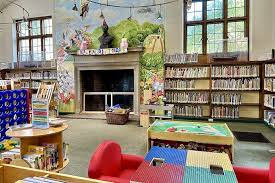
As someone who’s been both a classroom teacher and administrator at the building and district levels, I understand the desire to dictate summer reading as a way to encourage students to continue their reading habit. I’m also a voracious reader, and part of that desire was built inside my public library through summer reading programs. I remember participating in games and earning prizes each time I completed a book. The children’s library in my hometown was a magical place. It was separate from the adult library, with kid size chairs and tables, centered by a gorgeous fireplace. It was the perfect place to explore the shelves and then curl up with a book. I’m sure there are many educators that have similar, positive reading memories, so it’s understandable that we think creating the opportunity to read a good book will nudge non-readers into picking up a book during the warm summer months. For me, I look forward to summer days when I can sit by the pool or in the sand at the beach and get lost in a good book.
In addition, how many times have I read professional texts from pedagogues who remind us that finding the right book for a student will spark a love of reading. For example, I immediately thought about Disrupting Thinking: Why How We Read Matters by Kylene Beers and Bob Probst because the authors spoke in depth about the correlation between time spent reading and increasing vocabulary. I also think about Readicide: How Schools Are Killing Reading and What You Can Do About It by Kelly Gallagher because he champions providing students with a “book flood” because so many students, particularly in low-income areas, don’t have access to enough books.
On the other hand, as a classroom teacher I know that assigned summer reading activities don’t translate into an instant love of reading. I’ve seen year after year where a small number of students hand in summer reading assignments that are voluntary, and when projects are mandatory they complete it right before the due date if at all. Some would think that counting it for a grade would make a difference, but you still get students who fake their way through the assignment or don’t complete it at all. Also in an age of AI programs that can generate almost anything, students will use them to create the completed assignment rather than read the book.
So what is the right answer? We live in an age of data and accountability where we need to assign tasks in order to collect information. Therefore, as we design these assignments and send them out to students, we should also ask ourselves – Does assigning something really move the needle or provide the desired outcomes?
Hopefully we can find an answer that is a balance between what is requested by school leaders and parents and what is actually in the best interest of children. Personally, I don’t know that assigning reading with logs, creative assignments, and/or essays are going to miraculously make students readers. However, I do think that schools should support the efforts of public libraries and encourage students to use time over the summer for reading. I’ve also seen districts have some success when they incentivize summer reading, especially when it is linked to opportunities that bring families together, like scavenger hunts in the community, events at local museums, or gathering together at parks.
In the end summer reading assignments seem to bring up the desire for a perfect answer to a complicated question. We can all agree that students should be reading over the summer, but how we get them there is still up for debate.
If you’re looking for summer reading ideas, here are some suggestions from my reading list.
Looking for YA? Try these:
- Heartsick by Kristina Forest
- Breakout by Dhonielle Clayton, Tiffany D. Jackson, Nic Stone, Angie Thomas, Ashley Woodfolk, and Nicola Yoon
- Audre & Bash Are Just Friends by Tia Williams
- A World Worth Saving by Kyle Lukoff
- The Scammer by Tiffany Jackson
Here are titles I’m looking forward to this summer:
- The Summer Girlfriend by Kristina Forest
- The Missed Connection by Tia Williams
- The Romance Revival by Christina Lauren
- Score by Kennedy Ryan
- Love You More by Emily Giffin
Happy Reading!

