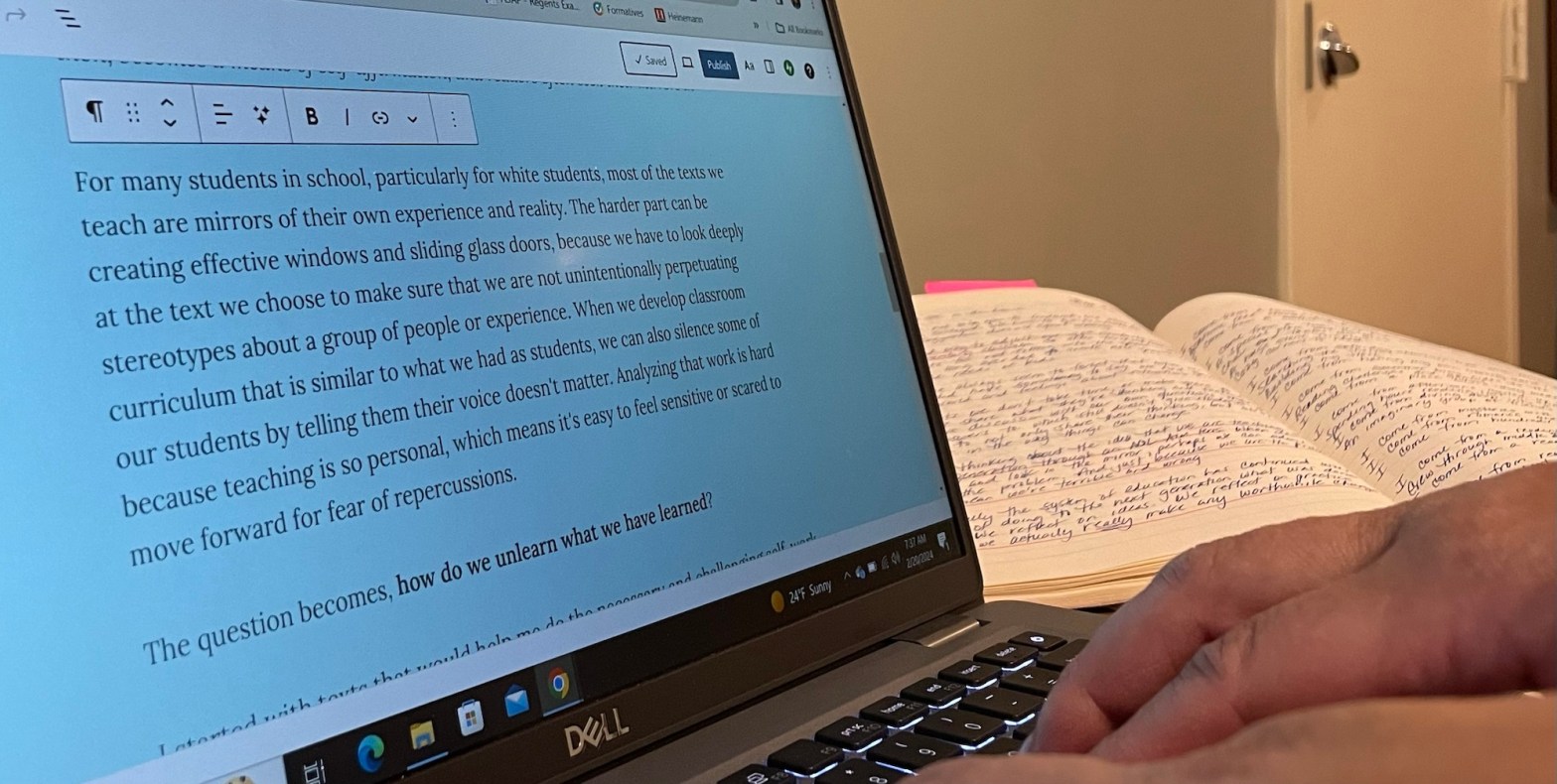
In February over President’s weekend I was able to experience a writing retreat hosted by Leaf and Pen. I’ve spent a lot of time over the last year thinking about building in time and practice for writing. After all, I started this blog over two years ago, often come up with ideas for content, and then don’t follow through with the actual writing of posts.
Last spring after meeting a colleague at NCTE, I participated in a 30 day writing habit where she sent daily prompts every morning for 30 days to encourage daily writing. This year at the New York State English Council fall conference I was introduced to Eve Becker of Leaf and Pen because she hosted a drop in writing space for attendees. That connection brought me to this weekend’s retreat at the Highlights Foundation facility in Boyds Mills, Pennsylvania.
Admittedly, I waited until the last minute to register. It sounded like an interesting experience, having time all weekend just to write. What would I do? Would I be an imposter in the company of “real” writers? When Eve emailed that it was now or never to make a decision, I jumped in with both feet.
As I packed up the car and headed out on a snowy February morning, I felt both nervous and excited. I was unsure what the weekend would bring, and only shared that I was attending the retreat with my husband, immediate family, and a couple close friends. I figured I could use the time to finish blog entries and maybe even play with some creative ideas swirling in my brain. Perhaps this would be the perfect time to firmly embrace my “writer” identity.
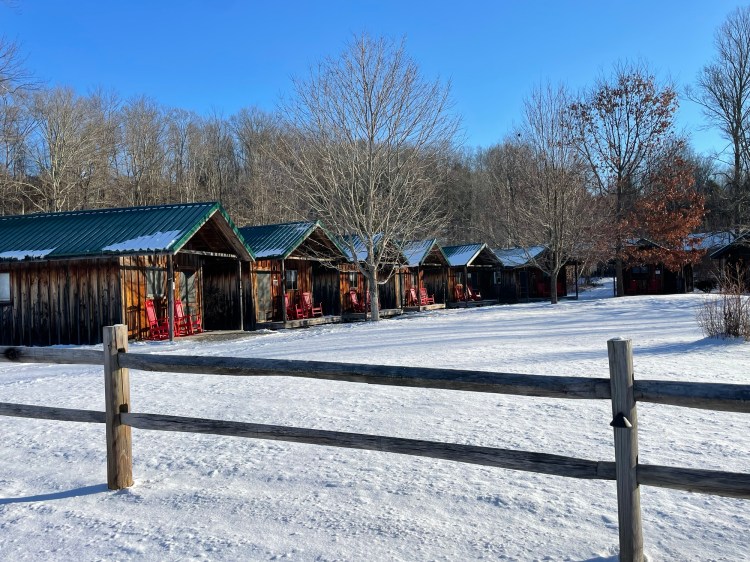
There was also something rustic and romantic about this adventure. The Highlights facility is located in the Poconos, off the beaten path, with room choices that included individual cabins that only added to the imagery. I envisioned myself in a cozy cabin with my notebook and computer capturing brilliance. In reality I was assigned to “The Lodge” that had a common living room space and eight guest rooms. When a friend described the Lodge as a “dorm room” the picturesque image of my writing weekend shifted.
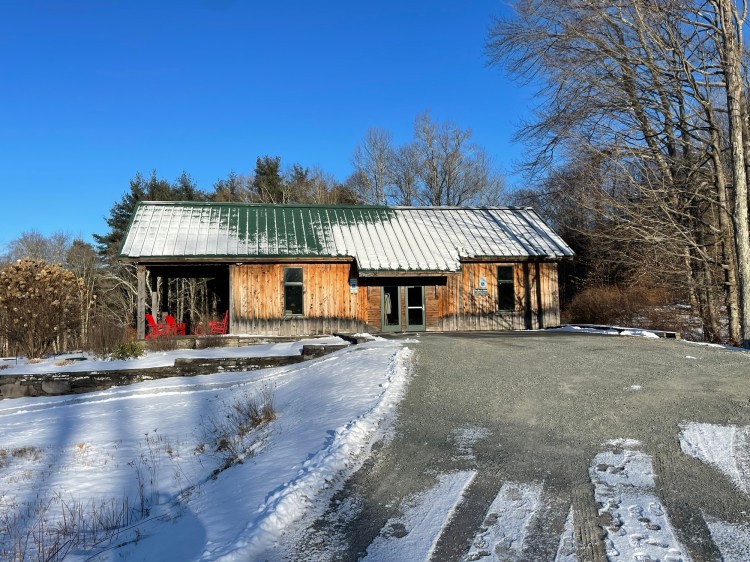
As I arrived and walked into the living room of the Lodge, the attendees were participating in a communal activity with various pictures on chart paper. We were invited to do a gallery walk of the photos, and then stop at those that moved us to write a few sentences as a story starter. I felt so nervous in this room full of strangers that I wanted to hide in my room and figure out my next step. But Eve welcomed me with a big hug, warm smile, and words of encouragement that quickly made me feel at ease. As that activity ended, I unpacked, took out my computer, and settled in the recliner couch in the living room to complete and edit a new post.
At dinner I met more of the retreat members and greeted a couple friends that were there as well. As people settled in and made conversation, I was completely intimidated by this simple question: What are you writing? I was unsure how to answer because I’m barely able to acknowledge that I am a “writer,” let alone a “Writer.” Thankfully this community of educators was so warm and welcoming that by the end of dinner and the evening reading, where several people shared a little of their own writing, I began to feel like part of the group and even volunteered, all be it hesitantly, to read my own writing the next evening.
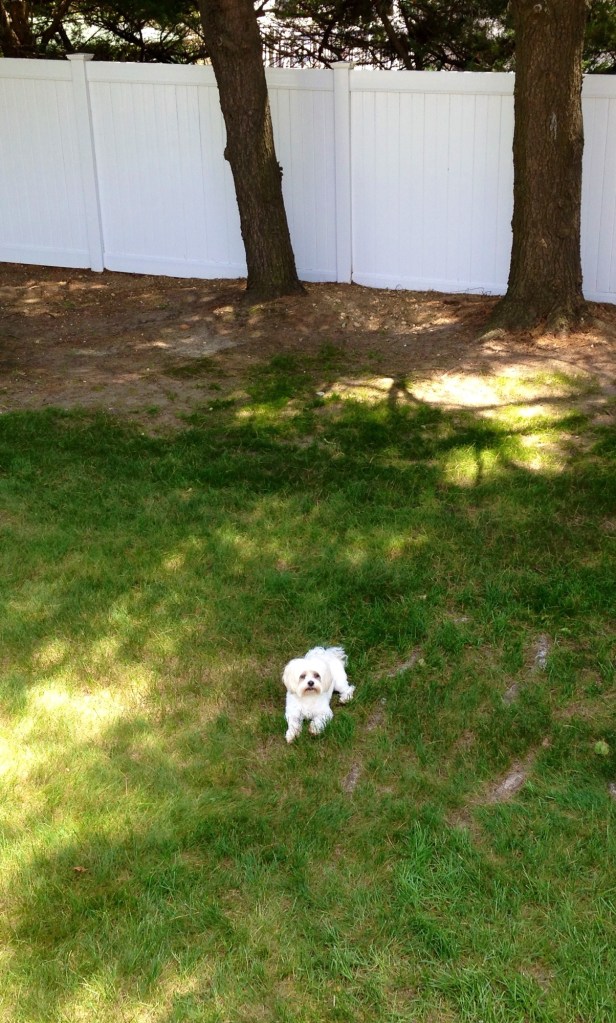
The next morning, I had second thoughts about volunteering to read, but decided I would select a past blog post from here, and work on a short story that I started over the summer about my precious girl Bailey. As I worked through the morning crafting a story that I envisioned could be a picture book, I felt nervous about sharing a piece in its early stages. However, I soon realized that I wouldn’t gain the fullness of this experience if I wasn’t vulnerable and willing to take risks.
That evening five people, including me, shared their writing. I was simultaneously nervous and calm about the whole thing. There’s always discomfort about sharing your creativity with an audience, but after spending several mealtimes getting to know one another, I also realized that this would be a safe place to share a part of me. I appreciated the warm feedback I received after reading my pieces, and felt my writer identity bubble grow a little bigger that evening.
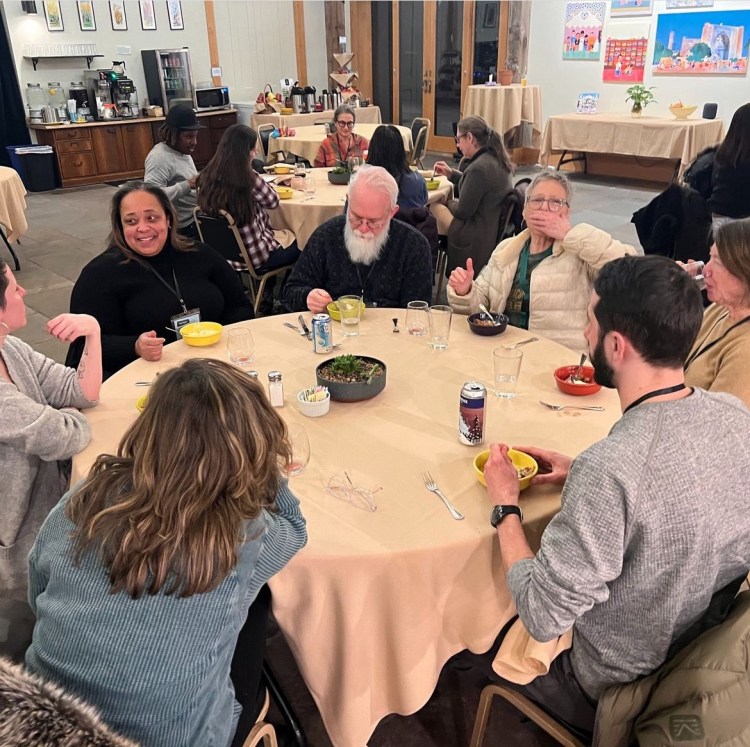
As the weekend continued I was surprised to discover that I enjoyed writing at the desk in my room. I was also glad that I ended up in the Lodge. For me, since you feel like you are in the middle of nowhere, it was comforting to be in a larger building instead of thinking about being isolated in a cabin in the woods. However, many of those in the cabins enjoyed the secluded space. I found that meal times enabled us to get to know one another more, and the food was absolutely delicious! Definitely a fresh farm to table vibe – shout out to Chef Amanda!! The experience was a reminder of the way in which community can build who we are and how we see ourselves, especially in a creative space where it is easy to let doubt creep and settle inside you.
To close the weekend, Eve brought us back to our identities as educators. She asked us to reflect on how our personal writing journey would impact what we do in the classroom. Common themes that arose were time and models.
- We can’t expect our students to develop their own skills as writers if we don’t give them time to write. Which means that providing classroom time to write, even if it’s only for a few minutes, is classroom time well spent.
- We need to acknowledge the value of sharing our own writing with students. Not just the finished product, but also the struggles along the way. Students need to see that writing can be both hard and easy, as well as know that persevering through the struggles enable the creation of a beautiful final product.
- We remind students that the writing process is not linear. It doesn’t always go from start to finish, because sometimes it’s easier to start in the middle or with an idea that inspires you and then find out where it fits later.
- We need to show students, through our lessons and own actions, that the parts of the writing process (plan, write, revise, edit, publish) can happen in a variety of different ways. Sometimes we write, then plan. Sometimes we revise, then write some more. Sometimes we edit, and then plan again. Sometimes we can publish and want to continue to revise and edit. Ultimately there isn’t one right answer, because the writer needs to figure out what works for them in that time or for that piece.
This final discussion was an important reminder how our personal practice can influence who we are in the classroom with our students. So often we assign tasks to students without fully understanding the lift needed to complete the task. We are also burdened by the expectations of what should be happening in classrooms. We worry about the reaction from a supervisor or even fellow colleagues if they walk past our classroom and “see the students doing nothing.” However, just like athletes, we can’t improve our skills if we don’t practice; which means that our students need us there to coach them through the drills towards success.
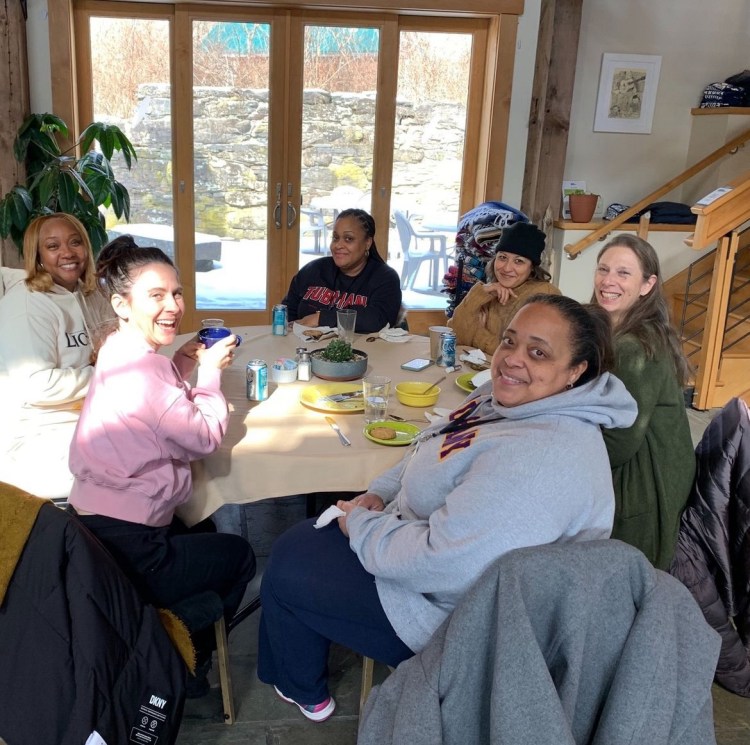
This experience was transformative. Before the end of the weekend I was more comfortable talking about what I was writing. One morning a member of the group shared a strategy that she uses to help her with plot that enabled me to begin to organize my own story. I left the Highlights facility inspired to continue finding time each week for my own writing. I’m thankful for the time spent with this community of writers … for not only sharing their writing but also a part of themselves.
Thank you to Eve and the February 2024 Leaf and Pen Writing Retreat for Educators cohort. Until we gather again, happy writing.
 Teaching with Equity
Michelle,
Thanks for sharing so openly about this experience. That sense of being an imposter is so widely shared among the other teachers I know who are writing– so many of us are reluctant to claim the name of writers, even though we may believe fully that every one of our students has something important to share and can write it effectively given the opportunity. We believe in them. Thank you for extending that same grace to yourself!
LikeLike
Thanks Dean! Your affirmation is appreciated.
LikeLike