New Beginnings
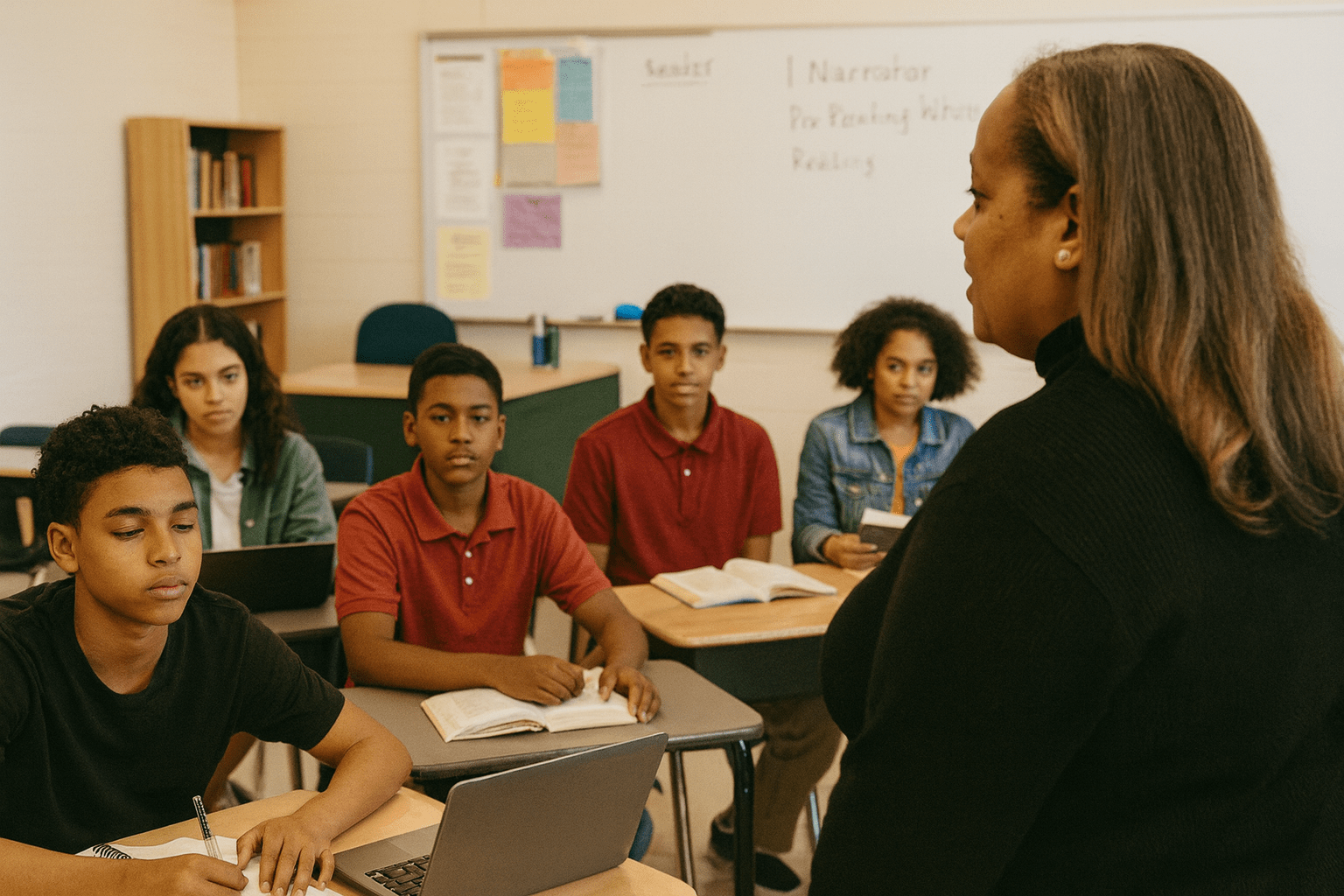
After two decades in administration, I am back in the classroom as a full-time teacher. Those 20 years weren’t entirely spent in administration. In my first administrative position I served as a department chairperson with a teaching load of two classes, and then there was a school year I spent as an elementary reading teacher. This summer, when it became clear that I would begin this school year in the classroom, many people asked how I felt about teaching again in a way that implied it was something beneath me. Little do those who’ve only been teachers know, and what administrators feel but rarely say out loud, some things are not what they appear to be. Therefore, as I reflect on the first quarter of the school year now that report card grades are complete and parent-teacher conferences are done, I wanted to share some observations about transitioning back to teacher life.
As the school year began, as expected, the students weren’t the hard part of the change. Instead, I’m finding that navigating technology has me rethinking practices when planning for instruction. It sounds so ancient to say, but the last time I had my own English classroom I used a chalkboard, and had a screen and overhead projector. Although in my first years of teaching I did use a digital gradebook, I also downloaded the quarter grades to a disk that was shared with the guidance office, and then they uploaded the quarter grades and report card comments into the system. Every classroom did not have a computer because there wasn’t a student management system available to the entire staff with information at your fingertips.
Back then, on the opening days of the school year, the students completed a paper form that I created to write their address, phone numbers, and class schedule. Parents were also asked to complete a paper form with emergency contact information. There weren’t apps like Remind or ParentSquare to send immediate messages to students or families. If you wanted to talk to parents, you made a phone call, even email was rarely used as a form of communication. If the administrators shared information, then there was a printed memo in your mailbox. Attendance was taken on a bubble sheet that was picked up from a pocket file folder attached to your classroom door by a teacher’s aide or support staff member. Just typing these words makes me realize how much has changed in the last 20 years.
In the beginning of my career, my students worked in notebooks, binders, and folders. They used their lockers because they had a variety of notebooks and textbooks. By comparison, in today’s classroom the students use Google Classroom, have one-to-one devices, and store work in digital files. Teachers can use digital platforms to share content and assignments, and then use programs like GoGuardian to monitor students while they are on their devices. Digital platforms also make it easier for students and families to keep track of progress on a regular basis because they can easily log in to see quarter grades and missing assignments.
In addition, this year the Governor of New York State approved legislation for a bell-to-bell ban of devices during the school day, joining more than 20 states across the country that have developed guidance to keep students as device-free as possible during the school day. For an educator who feels simultaneously like a veteran and new teacher, I’m thankful that cellphones in the classroom are one less thing to contend with while teaching. As I listen to colleagues, although they note that students seem more focused and attentive during class, many are adjusting to their students being more talkative now that they can’t tune out with their devices. However, as someone who didn’t have to contend with cell phones in class and taught middle school for over a decade, talkative students feel familiar. Not only is it something I understand, but quite frankly I prefer the students participating rather than staring into the void and getting silence as a response.
One challenge that didn’t exist for classroom teachers 20 years ago was contending with artificial intelligence. Since the advent of generative AI platforms, English teachers have complained about students using AI to complete work, and as a result they are trying to find the balance between what assignments should be done on paper versus digitally. While there are benefits to using AI to support instruction, many of my colleagues are pushing for more paper assignments to avoid students having an AI complete their work. In addition, because the New York State Regents exams are still paper-based, we see that students need help building their stamina with handwritten tasks. So often we hear students complain after writing for 5 minutes that their hands hurt, but then they have to work for three hours straight writing essays for the Regents exam. Therefore, in my classroom I’m having students write regularly in their journal notebook as well as do some assignments on paper to help increase their stamina. However, having to read their handwriting is a whole other thing.
Before the beginning of this school year, I didn’t worry about reading students’ handwriting because as an experienced English teacher I can read almost anything. However, as I started to review student work, some students’ handwriting was almost illegible, which made me think that typed assignments weren’t a bad idea. Another positive about digital assignments is that I don’t have to lug stacks of essays that need to be graded. The downside of digital work in class is that teachers have to constantly monitor what the students are doing on their devices, or else they will play games and watch videos instead of doing work.
Finally, the biggest shift for me moving from administration to teaching is adjusting to the workflow. I don’t mean the amount of work to do, because either way the jobs require a lot, instead I mean the time available to get work done. As an administrator I had more flexibility to structure my time in a way that enabled me to complete tasks during the work day while also scheduling time to visit classrooms and work with teachers. On the other hand, as a teacher there are not enough hours in the school day to teach five classes, plan for instruction, and grade for 120 students. As a result, I am spending hours outside of school on evenings and weekends to ensure that everything is complete. Even though I use as much time as possible during the school day, it’s still necessary to carve out time outside of the school day to plan and grade.
As the second quarter begins, I will continue to think about next steps while always reflecting on what’s been done. I’ve always prided myself on being an administrator who stayed connected to the realities of classroom life, and I’m finding that has served me well. I don’t feel out of touch from today’s expectations, while also having a unique perspective on things that might not be fully explained by our supervisors. I now live the experiences my teachers shared in department meetings and post-observation conferences, and while I never disbelieved them, I have a deeper appreciation for the struggles we face every day.
Education is not for the weak. It is not simple. It is not easy. It is hard work. Important work. Work that should be better valued. Work that needs more training.
Teachers that need more support. More resources. More time. More trust. Trust from administrators, parents, and the community.
There are people working very hard despite the narrative that is shared. Could we do better? Absolutely. But moving from good to great cannot lie solely on the shoulders of the classroom teacher. Moving the needle is about how well the system functions. For students. For families. For teachers.
This veteran new teacher is doing her best, and each small step forward helps students grow. If you are a school leader, check in on your teachers. Ask what supports they need instead of only asking for what data they can provide. If you are a teacher, know that your work matters more than ever. I see you, especially because I am you again. And with that, let me get back to planning for this week.
 Teaching with Equity