Moving Past the Ancient Texts
In episode 8 of the new Star Wars movies, we meet a sullen Luke Skywalker who has banished himself to a remote planet because of his failures as a Jedi master. Rey, after finding the correct map, seeks out Skywalker to train her in the ways of the force. Luke, worried about the power he senses in Rey and the possibility of continued failure, decides it’s time to end the whole Jedi Order. In this scene he goes to the tree with the ancient Jedi texts and decides to destroy them. As he’s about to light the tree on fire he turns and sees Force ghost Yoda. He tells Yoda that he’s going to put an end to the Jedi, and when he hesitates Yoda uses his power to set the tree on fire. Luke responds, “So it’s time for the Jedi order to end,” to which Yoda responds, “Time it is … for you to look past a pile of books.” Luke exclaims, “The sacred Jedi texts!” Yoda, with all his wisdom states:
“Time for you to look past a pile of old books. Hmm. Read them have you? Page turners they were not. Yes. Yes. Yes. Wisdom they held. But that library contained nothing that the girl Rey does not already possess. Hmm. Skywalker, still looking to the horizon. Never here at the need in front of your nose. Headed my word, did not you pass on what you have learned. Strength. Mastery. But weakness, falling, failure also. Yes. Failure most of all. The greatest teacher failure is.“
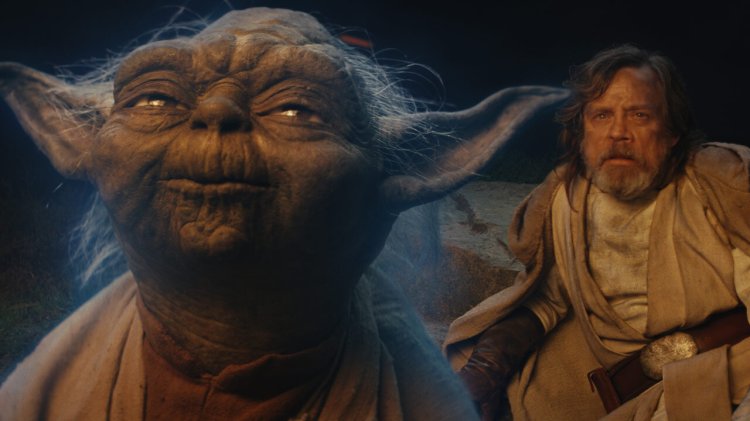
Luke, burdened by what has become of Ben Solo, blames himself for Ben turning to the dark side, is fearful of starting again with Rey, and worried that he doesn’t have what it takes to be the teacher she needs.
In today’s educational landscape, many teachers carry a heavy burden. We often ask ourselves: Are we truly what our students need? Has our own training equipped us with the tools to meet their diverse and evolving needs?
As the students in our classrooms become more diverse, should we look at the “ancient texts” in the curriculum? If asked, I’m sure most would agree, “Page turners they are not.” To them they are an old pile of books. Ones that they so often don’t even read.
As we review and revise curriculum, the most immediate solution is to add more contemporary texts. But we must also ask ourselves: Do contemporary texts provide students with everything they need? Like it or not, many American cultural norms are rooted in traditional, canonical texts—references that may not resonate with students if they haven’t encountered those works. Is there a way to bridge the old and the new? Can we create meaningful connections between the enduring themes of the canon and the fresh perspectives of contemporary authors, so that our students benefit from both worlds?
Additionally, in a time when 20th-century educators often focus on what our 21st-century students lack, we must ask: Is there a disconnect because we’re looking toward the horizon and can’t see what’s under our nose? As we plan for instruction do we think about: What do our students already posses? How can they teach us? Answering these questions matter because if we don’t connect with our students, we risk losing them entirely.
Maybe it’s time for the old order of teaching to end. Shifting our practice in a way that values what our students bring to the table, rather than assume they are vessels that need to be filled before they can add value. What if we worked to leverage what they already know, use that as a space to begin, then encourage them to push farther?
Books like these can help us develop classroom spaces that build content knowledge, grow skilled readers, and make space for students to share their understanding of the world.
We Got This: Equity, Access, and the Quest to Be Who Our Students Need Us to Be by Cornelius Minor
Being the Change: Lessons and Strategies to Teach Social Comprehension by Sara K. Ahmed
Not Light, but Fire: How to Lead Meaningful Race Conversations in the Classroom by Matthew Kay
The Anti-Racist Writing Workshop: How To Decolonize the Creative Classroom by Felicia Rose Chavez
Textured Teaching: A Framework for Culturally Sustaining Practices by Lorena Escoto Germán
As the scene closes, Yoda tells Luke,
“We are what they grow beyond. That is the true burden of all masters.”
As teachers it is our burden to help our students grow beyond us. They don’t all grow on our watch, therefore we must pass on what we have learned … especially failure. We want our students to feel success. We want them to do well. But there is so much more that can be learned from failure. Think about the times when you almost had it, or totally missed the mark. That drive to do better the next time is fueled by the mistakes we make. Everyone falls down, so we have to teach our students how to get up, brush themselves off, and stand tall ready to face the next challenge. It can be so easy to internalize negative feedback, or focus on what we did wrong. Therefore we must remind ourselves not to ignore what we have learned from challenges, because doing so can keep us from stepping towards success.
It’s hard to see our students our students stumble. It’s also hard to let them fall. But that productive struggle is learning that will help them grow beyond us and become who they were meant to be. Embrace the journey, pass on what you have learned, and trust they have the tools needed to grow.
May the Force be with you. Always.
 Teaching with Equity