
Creating Affirmative Spaces
I’m a child of the 80’s that loves Star Wars. The original moves. Episodes 4-6: Star Wars, Empire Strikes Back, and Return of the Jedi. I’ll tolerate the prequels because they serve a purpose and appreciate episodes 7-9, but mostly I love the characters and messages from the movies.

Princess Leia was the first rock-star, kick-ass female character I saw on screen. She was not only in control, but also in charge. The rebellion wouldn’t be successful if it wasn’t for Leia’s leadership.
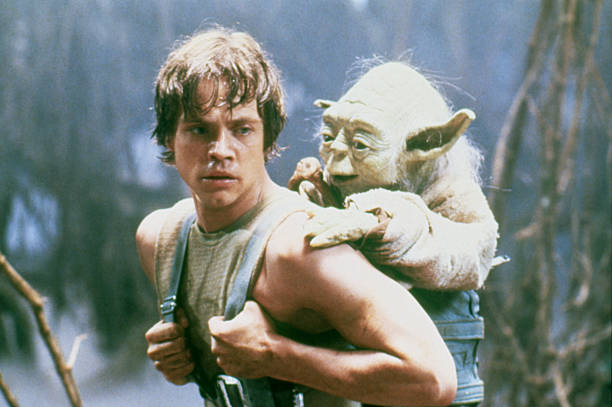
Then there was Yoda. The ancient Jedi master, full of sage advice. When Luke unsuccessfully tries to lift the x-wing fighter out of the swamp he tells Yoda, “I can’t believe it.” To which Yoda responds, “Which is why you fail.” He reminds Luke to, “unlearn what you have learned.”
If you truly want to create safe, affirming spaces you can’t do a little of the work. You have to do the hard soul-searching self work, identify your own biases, and call in those that are disrupting what you are trying to achieve.
As English teachers we often limit equity work and culturally responsive practice to the texts we teach. We frequently quote Rudine Sims Bishop saying that books should be “windows, mirrors, and sliding glass doors.” But what does that really mean? Bishop’s full quote states that, “Books are sometimes windows, offering views of worlds that may be real or imagined, familiar or strange. These windows are also sliding glass doors, and readers have only to walk through in imagination to become part of whatever world has been created or recreated by the author. When lighting conditions are just right, however, a window can also be a mirror. Literature transforms human experience and reflects it back to us, and in that reflection we can see our own lives and experiences as part of the larger human experience. Reading, then, becomes a means of self-affirmation, and readers often seek their mirrors in books.”
For many students in school, particularly for white students, most of the texts we teach are mirrors of their own experience and reality. The harder part can be creating effective windows and sliding glass doors, because we have to look deeply at the text we choose to make sure that we are not unintentionally perpetuating stereotypes about a group of people or experience. When we develop classroom curriculum that is similar to what we had as students, we can unintentionally silence some of our students by telling them their voice doesn’t matter when they don’t see their lived experience represented. In addition, we can add diverse texts to the curriculum that show a narrow view of a group of people. Therefore, taking stock of the blind spots in our curriculum is important. However it can also be challenging work because teaching is so personal, and as a result it’s easy to feel sensitive or scared to move forward fearing backlash or repercussions.
The question becomes, how do we unlearn what we have learned?
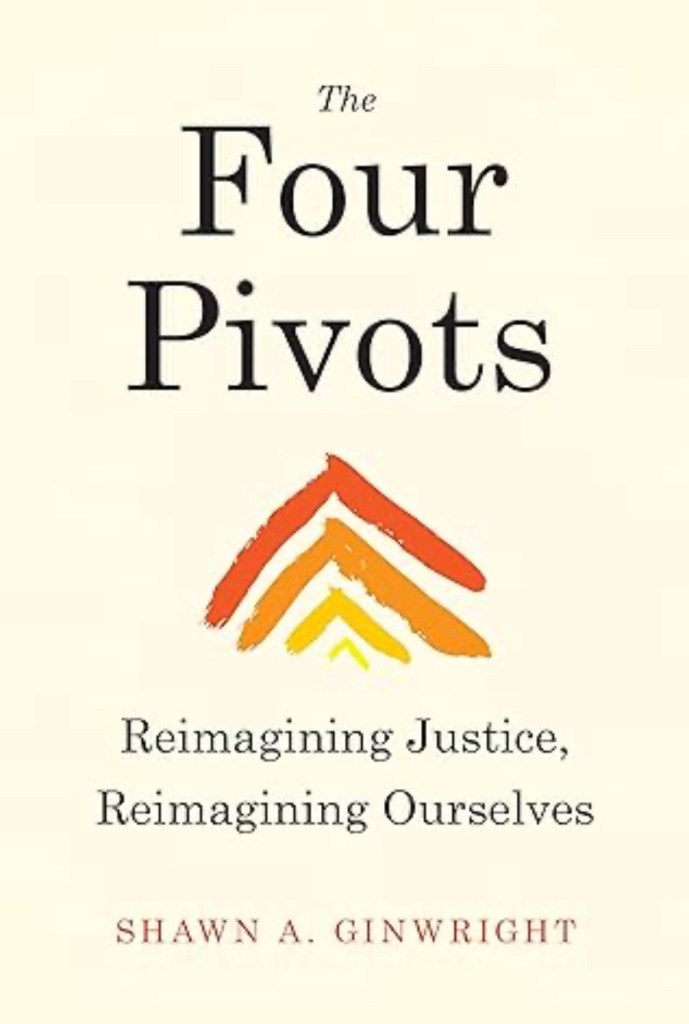
I started with texts that would help me do the necessary and challenging self-work that enables you to see a situation with different eyes. In his book The Four Pivots: Reimagining Justice, Reimagining Ourselves author Shawn A. Ginwright identifies four ways to shift our mindset in an effort to build a better world:
- Awareness: from lens to mirror
- Connection: from transactional to transformative relationships
- Vision: from problem-fixing to possibility-creating
- Presence: from hustle to flow
The most challenging part of those pivots can be the first one: Awareness. Lens work enables use to see what happens to other groups of people, but the mirror work is even more valuable because that reflection is what will bring about real change. In this episode of Brene Brown’s Unlocking Us podcast, Dr. Ginwright states that healing can’t occur without mirror work, because in order to make meaningful change you have to create systems that undo the trauma created by oppression.
The second pivot, Connection, is necessary because if we only have transactional relationships, doing things for people without connecting to those you are helping, then you will never truly understand the humanity that connects us. Transformative relationships start when we take time to learn about one another, make deeper connections based on the ability to be vulnerable, and share a deep understanding of our life experiences. As teachers, if we only look at what we have to do and ignore who we are working for, then we can miss the opportunity to learn about the humans in our classroom and build strong relationships with our students.
The third pivot, Vision, asks you to not only think about how to solve problems, but also think about the possibilities of what can be achieved. Thinking back to Star Wars and Luke Skywalker’s journey to become a Jedi, he struggles the most when he’s only trying to solve a problem (i.e., moving his aircraft or leaving training to help his friends) because he is reacting to the immediate situation and not thinking through the possibility of what can be. Dr. Ginwright says that when we can’t find a way to imagine success — to dream big — then we become satisfied with small changes rather than creating the kinds of spaces / achievement / conditions that allow us to dream above what we want to be. As teachers it is our responsibility to make sure that we give our students places to dream and imagine, because without it we limit their possibilities.
In the fourth pivot, Presence, Dr. Ginwright reminds us that we can get caught up in the need to feel busy. We are over scheduled, with an ever growing list of things to do, under the premise that doing lots of things means we’re working really hard. He doesn’t define hustle as the things we do to support our lives. Instead, he’s referring to the way that our society values someone by what they can earn or produce. This constant need to rise to the top results in the frenzy that consumes our days and prevents us from making a deeper form of change. He asks the reader to think about how we build systems, organizations, and policies that give people the time recharge and reboot. As teachers we often become frenzied by the list of initiatives, meetings, curriculum demands, assessments, etc., which can make it difficult to figure out what we must do, versus what we can either put on a shelf or leave behind. Honestly, I can’t even begin to think about what that might look like because we are in a constant cycle of what needs to be done in order to give our students / teachers / colleagues what is needed. However, the other truth is that so many educators feel burnt out. Therefore it is unrealistic to sustain this pace and keep ourselves healthy.
We must remember that change doesn’t happen quickly. It often happens painfully slow. However, every small change can lead to big things, just like a snowball rolling down hill. If you are afraid to begin, frozen by what could be, then it is impossible to unlearn what you have learned.
Yoda’s most sage advice, particularly when it comes to equity work, is “Do, or do not. There is no try.” We can’t make the world, or our classrooms, a better space if we don’t do something. So take a small step, and begin.
 Teaching with Equity